Insights
Introduction
Designing in a startup is different from designing in a scaled product team.
Startups demand speed, but not at the expense of clarity. Timelines are compressed, briefs are often evolving, and the designer’s role goes beyond execution, it’s about decision-making, systems thinking, and momentum.
This article outlines a framework for producing thoughtful UX design, quickly in high-velocity environments.
1. Prioritize Tasks, Not Pixels
When speed is a constraint, clarity becomes a compass. Designers should focus on:
What is critical for user flow?
What brings immediate product value?
What blocks development?
Visual finesse can wait. Information hierarchy and interaction clarity cannot.

2. Use Components to Move Faster (and Smarter)
Speed increases exponentially when reusable components are in place. Instead of designing screens from scratch:
Create scalable design tokens
Establish repeatable layouts (e.g., cards, tables, filters, forms)
Design for flow consistency, not screen-by-screen uniqueness
This makes fast iteration feasible and maintains a consistent user experience.
3. Work Parallel to Product & Development
In startup teams, design shouldn’t be a gate, it should be a guide.
Working in tandem with product and engineering helps:
Pre-align on constraints and feasibility
Reduce back-and-forth post-design
Ensure designs are implementation-ready on time
Design should feed velocity, not delay it.
4. Prioritize Feedback Over Perfection
Speed-oriented design benefits from quick feedback loops, not lengthy sign-offs.
Instead of waiting for high-fidelity approvals:
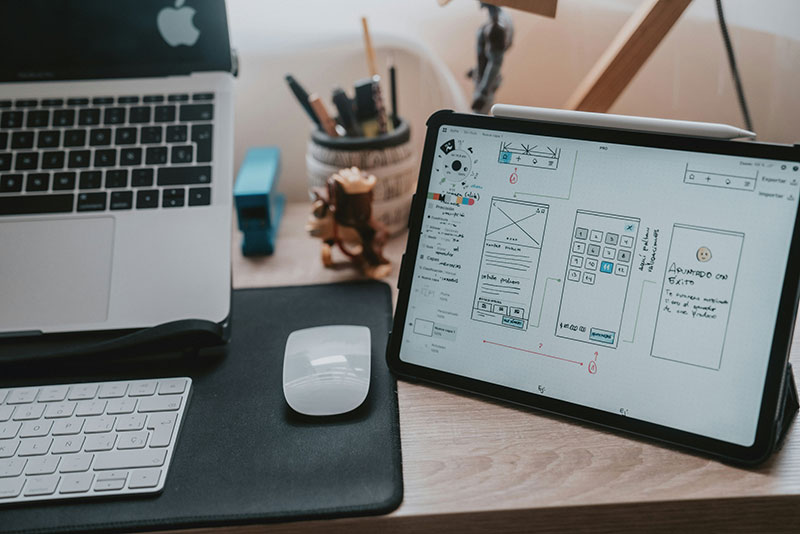
Validate early with clickable wireframes
Share exploratory directions internally
Use design reviews to unblock, not to polish
The goal is to test fast, learn fast, and refine once real usage begins.
5. Build for Scale While Delivering for Now
Even in MVPs or internal tools, systems thinking matters.
Designs made under pressure still influence long-term scale. So even when moving fast:
Follow a clear design pattern
Name layers and components consistently
Leave behind assets that help others pick up where you left off
Good design at startup speed balances urgency with sustainability.

Conclusion
Designing at startup speed is not about skipping steps, it’s about knowing which steps to take first.
By focusing on structure, modularity, cross-team alignment, and fast feedback, designers can contribute meaningfully even in fast-moving product environments.
Efficiency in design isn’t about working less, it’s about designing what matters most, when it matters most.